
You served for it.
You earned it. Now it’s yours.
We help career military officers and senior NCOs, whether you’re still in uniform or already past your retirement date, protect what you’ve earned and put it to work on what actually matters.
Why I do this work.

I started a financial planning career as I was leaving the Army, because at the time I had no idea what I wanted to do next, and the industry was set up to pull in people like me. What I figured out over the next decade is that the model I’d been recruited into doesn’t fit a career military retiree’s situation. So I left it and built the version that does.
The transition out of the Army is a strange and stressful time of life, no matter how long you’ve served. You’ve spent your working days inside an institution where the next assignment was usually decided for you, and now suddenly you’re supposed to know what you want to be when you grow up. Most of us don’t. Mine wasn’t different from anyone else’s. I knew I liked the idea of running something I owned. I’d been reading everything I could find on entrepreneurship, and self-employment sounded like the kind of flexibility I was after in the second act.
That’s the pitch the financial services industry uses to recruit transitioning military officers. They sell the work as “financial advisor with the autonomy of a small business owner.” What you learn quickly is that you’re representing the firm, you’re stuck in the firm’s model, and you have no salary. The firm pays you what you produce, and you have to learn the ropes fast.
I got licensed in 2008. I learned the business under a 30-year CFP in Stuttgart. He was a good operator, and he was just as desperate for new clients as I was starting out. That part of the model is non-negotiable. Every advisor, no matter how credentialed or how long they’ve been in, is fundamentally in the business of finding new clients.
What I learned in those first years is that advisors in the big-firm model are working from the same toolkit. Same licenses, same products, same prospecting model, same firm-mandated approach. The way you “win” is by gathering more assets under management and being all things to all clients. Specialization is structurally hard, and even credentialing like the CFP designation comes with its own model of operating that locks you into a generalist posture.
The firm websites all look the same. Rows of advisors in matching business suits, identical headshots, identical bios. There isn’t much real differentiation visible to a prospective client because there isn’t much real differentiation underneath either.
Inside the work, I started watching clients bounce between firms looking for outcomes they thought were a function of the advisor or the firm. The underlying money flow was the same wherever they went. The savings go through the same fund layers. The diversification approach is the same. The 30-or-40-year save-and-wait model is in every personal finance book ever written. What clients were really outsourcing wasn’t expertise. It was responsibility. Someone to talk to. Someone to be in the room with them when the market did what the market does. From money manager to advisor to client, everyone is hoping the account values look good when it matters.
A scorecard mentality starts to dominate. Clients ask if their accounts beat the market. Advisors track whether they got more new clients than last year. Firms track whether they booked more fees and commissions. Nobody is really asking the question that should drive the conversation: when this money matters, will it be there? And will the person it’s for still be in shape to use it?
I’m not interested in disparaging the big-firm model. It serves a real purpose, and a lot of people get value from it, especially while they’re still building savings from scratch. But there’s a population it isn’t built for: people who’ve already saved, earned a pension, already navigated most of the questions, whose lives are headed into a chapter where the math isn’t the hardest problem anymore. Career military retirees fit that profile almost exactly.
What kept me from getting fully stuck in the model was where I was sitting. EUCOM is full of retiring O-5s and O-6s. I wasn’t trying to specialize. I was just surrounded by one type of client, and the same problems kept showing up. Most of them needed help with life insurance, and the OCONUS twist meant most advisors couldn’t help even if they tried. Carriers underwrite based on state of residence, and the standard process doesn’t account for clients sitting overseas. I found the carriers that would, and the practice sort of built itself around that work.
I didn’t realize I was specializing. I just realized that’s where I was actually being useful, instead of trying to convince a client that one mutual fund was meaningfully better than another, or that running their numbers through one piece of financial planning software was going to produce a different projection than another firm’s software would.
What it eventually came down to is this: it’s the client’s money. They’re going to make their own decisions. The question I started asking was what would actually help them feel confident the money would be there when they need it, so they could stop watching the scorecard and start using what they’ve built.
For most of the people I work with, military retirees who’ve already done the saving, already earned the pension, already lined up the next chapter, the answer isn’t a bigger return. It’s clarity, structure, and protection of what’s already been built. Most of them didn’t serve in the military to get rich. The reframe I came to is that, in many ways, they already are. The pension, the benefits, the resume, the second-career income they’re heading into. The work I wanted to do was making sure that wealth gets used the way it’s meant to be used.
After more than a decade overseas, I moved back to the States and ended up in San Diego. I met my wife Jen there in 2016. She’s a Gold Star daughter. Her father died on active duty when she was ten. Meeting her gave me a whole new perspective on what we were actually helping career military families navigate.
By then I was already frustrated with the firm model. I’d tried to write a book and the firm wouldn’t allow me to publish it. They were too worried about anything that didn’t pass internal compliance, and they wouldn’t let me commit publicly to a niche. Around the same time, I was networking around San Diego getting introduced as “another financial advisor who works with military” by people who couldn’t see what I was actually trying to build.
In 2017, my father died unexpectedly, in his early 70s.
He’d coached football for most of his career, including a long run at Ohio State. The culture he lived in wasn’t military, but it had the same DNA. Discipline, hierarchy, mission, sacrifice, team. The thing that made him who he was, the players, the team, the role, the wins and losses, the championships, ended when he retired from coaching. He’d been at it long enough that by the time he stopped, he was exhausted. He looked retired in some sense. He found ways to fill the time. Treated golf like it was his next job, scheduled it, stressed about being on time. He’d plan vacations the way he used to plan defenses for the Michigan game. But the team was gone. The role was gone. He had a few short years and then he was gone with them.
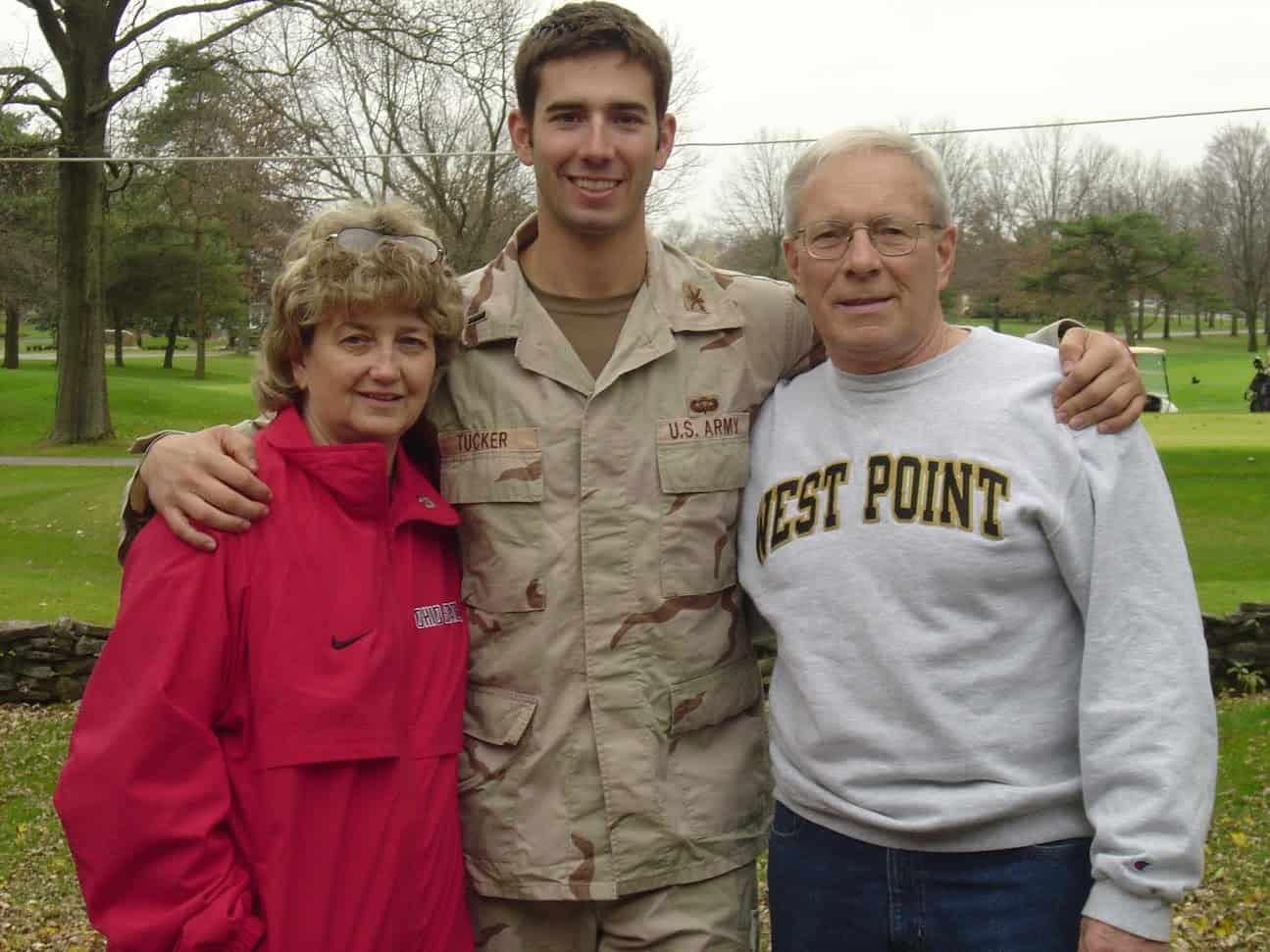
The thing he lost when he stopped coaching wasn’t his income. It was the team. The role. The people he was responsible for. Money doesn’t fill that. And in the few years he had, that emptiness mattered more to him than the math did.
What he did with the money, on paper, was right. He’d saved well. He had a written will. My mom was comfortable. He’d done the responsible thing.
A few months before he died, he was approved for a $1 million life insurance policy and turned it down. He thought it was too much coverage and took something smaller instead. My mom still had enough until her health declined. Long-term care costs are what they are. Without the extra million dollars that policy would have provided, the careful plan he built will largely get spent down on her care, and he never got to enjoy what he built in the first place.
That’s the truth I work from. Retirement planning is more about health and a sense of purpose than money. The money is the path-clearer. It’s not the prize. The prize is who you get to be once the money isn’t the constraint anymore.
Losing my father wasn’t a clean epiphany so much as the moment I stopped hedging. The frustration with the firm model had been building for years. After he died, I dropped the Series 6 and 65, left the firm, and went independent. Career military officers and senior NCOs only. Specific decisions where most advisors haven’t done the work: life insurance, annuities, SBP, VGLI, pension positioning. The books, the blog, the YouTube channel followed. None of it was about building an audience. It was about being findable for the people already asking the right questions.
The rule the business runs on, then and now: find those whom you’re meant to serve, and only those you’re meant to serve.
Your health is your wealth. Not the account balance.
Life insurance is about protecting one so you can focus on the other. In this industry, that’s literal: your health is what determines whether you can use these tools at all. You qualify while you’re well, or you don’t qualify.
Most military retirees don’t need help getting rich. They already are.
Project the future income from a career military pension and you’re looking at millions. The work isn’t building wealth from scratch. It isn’t running portfolios or managing assets. It’s protecting what’s been earned, the pension, VA income, time in service, so the rest of retirement can actually be about health, relationships, and a sense of purpose.
Most of these decisions involve a spouse signing off too. The conversation has to make sense at the kitchen table, not just on a slide deck.
Career military retirees aren’t average Americans. The system stops treating them that way at exactly the wrong moment.
Most of the military retirees I work with show up at some version of “I don’t know what I don’t know.” That’s the right starting place. The bubble doesn’t teach you civilian financial life, and the people who teach civilian financial life don’t usually know what to do with a pension, VA disability, TSP, SBP, and VGLI sitting on the same balance sheet.
A guaranteed pension. Tax-free VA disability for many. High employability into six-figure civilian roles. By the time a career officer retires, the math of his life isn’t average anymore, and that’s the exact moment the standard playbook stops fitting.
Save in TSP. Keep SGLI. Sign up for SBP. None of those defaults are wrong. They’re just defaults, built for the average American, optimized for someone who’s healthier, earns less, and has fewer options than the person reading this.
Just because something is a benefit doesn’t mean it’s beneficial to every individual situation.
The three decisions where the gap matters most
- Survivor Benefit Plan. A probability decision masquerading as a cost decision. Locked-in, hard to change, and not always the best vehicle for what it’s trying to do.
- VGLI. Easy to sign up for at separation. Expensive to keep over a 30-year retirement. Replaceable while you’re still healthy enough for the underwriting.
- The pension and TSP positioning. How the largest assets you own actually get protected and deployed inside the War Chest strategy, especially in the 20-year window between military retirement and traditional retirement age.
The deeper reframe under those three decisions: most retirees are planning for the wrong retirement. Everyone optimizes for age 65. The real opportunity is the 20-year runway between military retirement and traditional retirement age, the window where pension income, VA benefits, and strong civilian earnings could fund real flexibility, real choice, and real time, if the military benefits are handled right first.
Wealth insurance consultants. Not advisors, not planners.
It’s a category I had to coin because the existing labels don’t fit. We don’t manage assets. We don’t sell financial plans. We work with you on the specific decisions where most advisors haven’t done the work: life insurance, annuities, SBP, VGLI, pension positioning, and the underwriting that turns a yes-in-principle into a yes in writing.
Use us as you need us. Not done-for-you. Not do-it-yourself. We’re a done-with-you model. We give you access to these strategies, walk you through how they actually work, help you think through structure and funding, and stay available for adjustments as your situation changes over the years.
We have access to the full carrier marketplace through our broker-dealer Ash Brokerage, with no incentives tied to specific products. Carriers compensate us for brokering: life insurance, annuities, long-term care, disability, when you decide to act. Until then, the education on this site is free, and that’s the reason the business model works. If you find what we publish useful, you’ll respect the process when we talk. If you don’t, neither of us has wasted time.
The practice started in Germany, working with American officers stationed overseas. The years overseas made global movement feel ordinary, and that’s stayed useful as the client base has. Wherever you’re stationed, whatever the time zone, whatever the document logistics, we know how to handle it.
Fifteen-plus years inside how every layer of the financial industry actually works, broker-dealers, RIAs, fund companies, carrier relationships, plus specific competence with how military medical records present in insurance underwriting. Most advisors haven’t done that work. It’s where a healthy O-6 either gets the policy he qualifies for or gets quoted at the wrong rate class because nobody knew how to read the file.
The VA disability process is a related layer. Documentation that helps you qualify for disability, which you should pursue and we encourage you to claim every benefit you’ve earned, can also affect how your records read to a private life insurance underwriter. We help translate. Where it makes sense, we sequence the work so life insurance is qualified before any new documentation gets added to the file.
A small team on purpose.
We don’t want to be a firm. We want to be the right people for a specific kind of client.



Jen Tucker, the lived version of exactly what our clients are deciding.

Jen is a Gold Star daughter. Her parents were first-generation Filipino immigrants who joined the Navy. Her father died on active duty in Japan when Jen was ten, months before he was scheduled to retire. The dependent side of exactly what our clients are deciding when they choose how to handle the survivor benefit. The math, lived.
Jen helped draft the first US VetWealth book and has been part of this brand since the beginning. In 2018, after spending real time around the work and the audience, she launched Holding Down the Fort, her podcast for military spouses. She’d grown up adjacent to the military but had stepped away from that community for most of her adult life. The work pulled her back in. The podcast came out of that recognition.
Jen doesn’t take client calls. Her work runs on the audience side, building the conversation with military spouses that brings them into the planning before the planning gets locked in. The spouse is in the room for one of the most consequential decisions a family will ever make. Most material in this space treats them like an audience instead of a stakeholder.
Forthcoming
It’s Your Pension Too, Jen’s book on the SBP decision from the military spouse perspective. Working title. Due forthcoming.
Mike Wallace, CAPT (USN, Ret.), my podcast co-host and a peer doing complementary work.
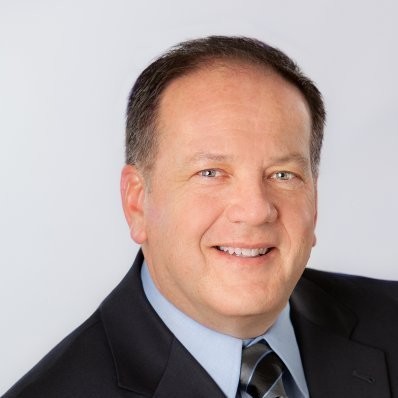
Mike retired as a Navy Captain after 30 years. Fighter pilot, commanded an air wing. After the Navy he went to Amazon, helped build out Amazon Air with significant hiring authority, and watched his peers, senior officers retiring a few years behind him, struggle with the executive-level transition. The existing transition programs weren’t serving that population well. He had the network and the credibility to do it better.

Blue Water Advisors
Mike co-founded Blue Water with a small group of similar retirees. Blue Water runs in-person cohorts only. No podcasts, no books, no public presence. Their thesis is that landing a job isn’t the goal. Landing the right fit is. Wrong fit means you’ll leave it. Mike vets every member personally, and Blue Water can typically deliver someone inside any company a candidate is targeting.
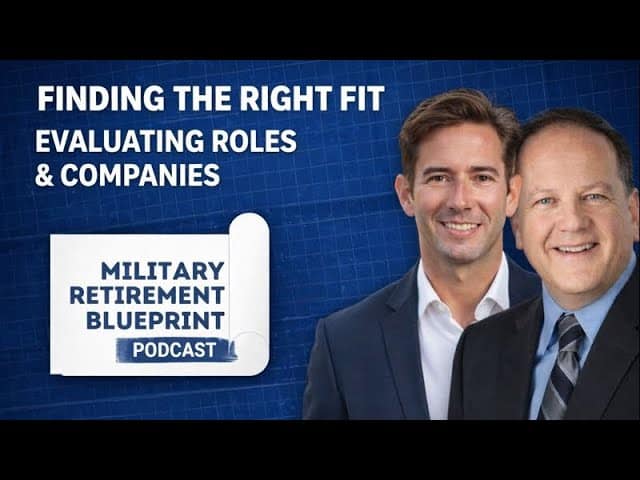
Visit Blue Water →Mike and I co-host the Military Retirement Blueprint podcast. He found me after sitting through a fear-mongering SBP retirement brief and recognizing the probability-based approach as the version of the conversation he’d been looking for. The fit between our practices is clean. My clients need jobs. His members need to maximize and protect the income they land. Neither of us is trying to do the other’s job.
The shared work
Military Retirement Blueprint Podcast
The conversation Mike and I have on the record. SBP, VGLI, executive transition, the 20-year window, what’s worked and what hasn’t. Listen before you book a call. If the way we talk on the podcast doesn’t sound like the conversation you’re looking for, it’ll save us both time.
Same discipline. Applied differently.
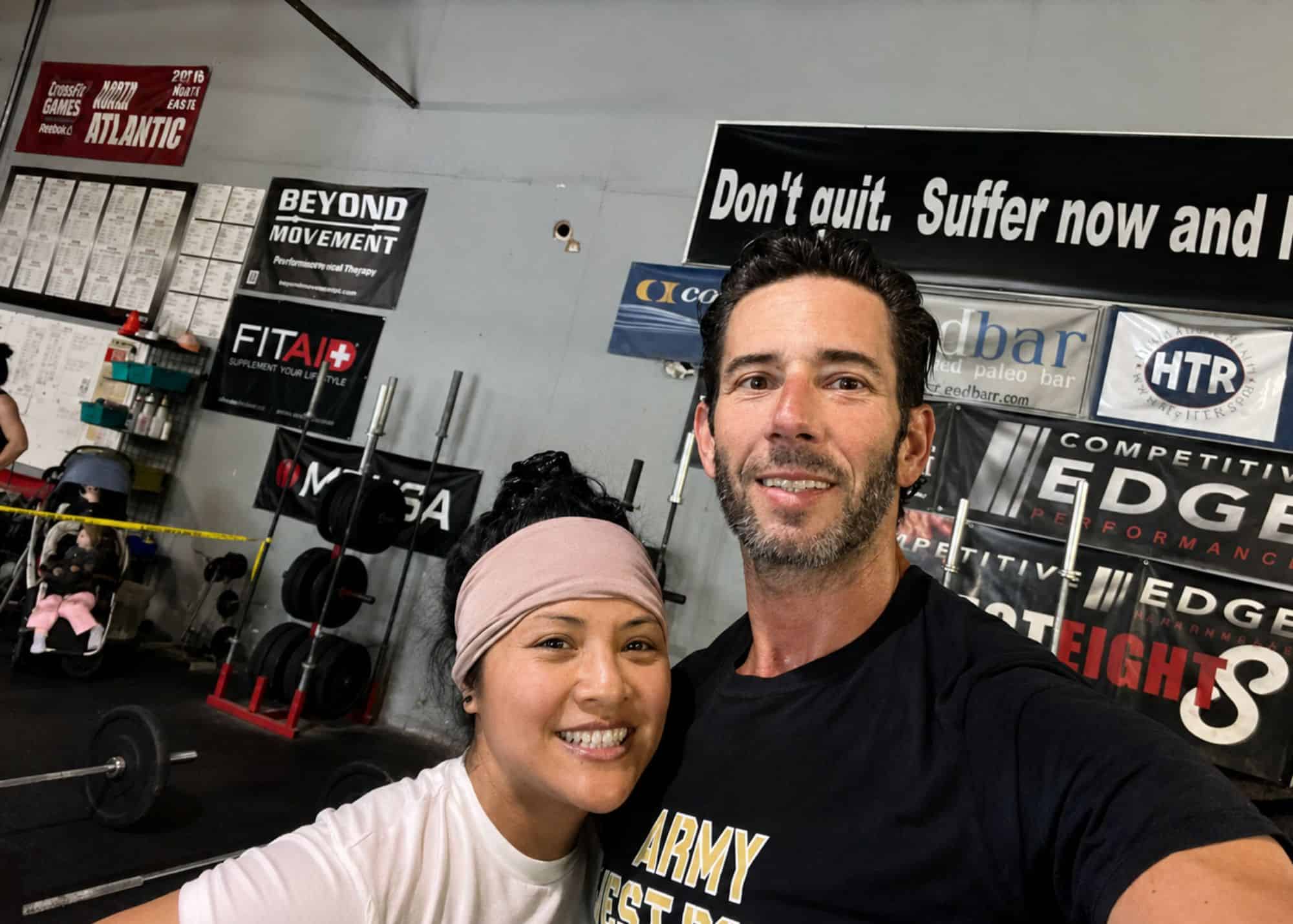
We live in Virginia. We do CrossFit. The same discipline that runs through the work goes into keeping a body and a mind in shape for the years ahead. The life is intentional: a small family online business, two podcasts, a book in progress, and the discipline of continuing to learn the craft. We aren’t trying to grow this into a firm with offices and agents. We like what we have.
Health and purpose. That’s the standard we hold our own life to. Same as the audience. The military teaches you to perform a role. Post-military life is the first time you actually get to choose what role you want.

If this sounds like the conversation you’ve been looking for, let’s have it.
Book a strategy call. We’ll talk through what you’re working with, what the three decisions look like for your situation, and figure out together whether it makes sense to keep going.
Book a Strategy Call